


When you're in the market for a hydraulic elevator, whether for a commercial building or a private residence, safety isn't just a buzzword-it's the foundation of every design choice, especially when it comes to the elevator floor. As a hydraulic elevator supplier, we've seen firsthand how even small oversights in anti-slip specifications can lead to avoidable accidents, damage to equipment, and liability issues for building owners. That's why we've invested years in researching and adhering to strict anti-slip requirements that align with global safety standards, tailored specifically to the unique mechanics of hydraulic lift systems. Unlike traction elevators, which rely on cables and pulleys, hydraulic elevators use a piston to lift the cab, often making them lower to the ground and more prone to floor moisture, debris, and uneven wear-so their anti-slip needs are distinct. To help you understand what these requirements entail, and how they apply to hydraulic home elevators and commercial hydraulic lifts, we've broken down the key standards, materials, and practical considerations that every project should prioritize.
First, it's critical to ground this discussion in recognized safety codes, because anti-slip requirements aren't arbitrary-they're mandated by organizations that set benchmarks for accessibility and fall prevention. In the United States, the Americans with Disabilities Act (ADA) is the gold standard for public and commercial spaces, but hydraulic elevators also fall under ASME A17.1, the Safety Code for Elevators and Escalators, which outlines specific flooring criteria for elevator cars. For residential hydraulic home elevators, local building codes often adopt or mirror ADA and ASME guidelines to ensure consistency across regions. The core of these standards focuses on the coefficient of friction (COF) of the elevator floor-this is the measure of traction between a shoe and the floor surface, and it's the primary metric for determining anti-slip performance.
Here's where it gets technical, and where mistakes are often made: ASME A17.1 and ADA both require a minimum static COF of 0.6 for dry conditions, and 0.8 for wet conditions. Static COF is important here because it measures traction when surfaces are not moving, which is exactly what passengers experience when stepping onto or off of the elevator floor. Wet conditions are a big deal for hydraulic elevators, especially in commercial settings like grocery stores, hospitals, or warehouses, where spills are common, and even residential spaces that might carry damp shoes or track in snow. A COF below these thresholds is a red flag-we've encountered projects where clients tried to cut costs with standard wood or smooth tile flooring, only to have their inspectors reject the installation because it failed COF testing. As a hydraulic elevator supplier, we include COF testing as a standard step in every floor design, because it's non-negotiable for passing inspections and keeping users safe.
But COF isn't the only factor. The texture of the floor surface plays a huge role in maintaining traction over time, which is why many people overlook "durability of anti-slip performance." Hydraulic elevator floors are subject to constant foot traffic, plus the wear from carts, wheelchairs, and service equipment, so a surface that's anti-slip when new can become smooth over months or years if it's not engineered to resist wear. For example, a floor with a high-gloss finish might meet COF requirements when it's installed, but regular cleaning with harsh chemicals can strip the texture, lowering COF below safety limits. That's why we specify flooring materials that retain their anti-slip properties through repeated cleaning and heavy use, especially for commercial hydraulic lift applications. For residential hydraulic home elevators, where foot traffic is lighter, the durability bar is lower, but we still recommend materials that won't wear down quickly from regular use.
Another key consideration is the edge transition between the elevator floor and the lobby or floor landing. This is a often-overlooked detail that's a common tripping hazard, and it ties directly into anti-slip performance. ASME A17.1 requires that the gap between the elevator car floor and the landing floor be no more than 1 1/2 inches, and that the edges of both surfaces be flush to prevent shoes or wheelchair wheels from catching. But the anti-slip properties of these edges are just as important-if the elevator car's edge is smooth, even a small gap can lead to a slip when stepping between two surfaces. That's why we design our hydraulic lift elevator floors with beveled, textured edges that match the main floor's anti-slip characteristics, creating a seamless transition. For residential hydraulic home elevators, where space is often tight, we work closely with contractors to ensure these edges are installed correctly, no matter the layout.
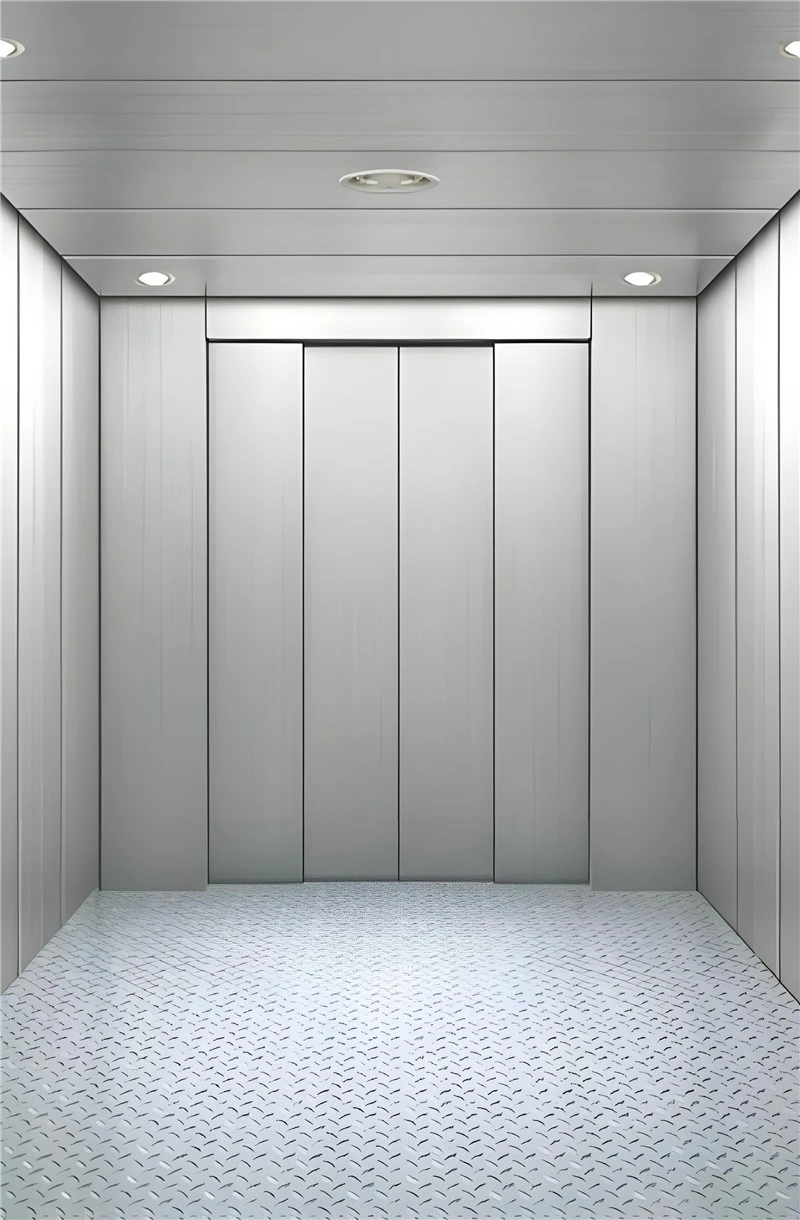
Material selection is where hydraulic elevator anti-slip requirements come to life, and not all flooring materials are created equal for this application. The most popular options that meet safety standards include non-slip epoxy coatings, textured vinyl composite tile (VCT), and polished concrete with a sealed, roughened finish. Each has its pros, depending on the project type. For commercial spaces like office buildings or retail centers, non-slip epoxy is a top choice because it's seamless, easy to clean, and maintains its COF over heavy use. It also resists spills from oil, water, or chemicals-critical for hydraulic elevators, which often have mechanical components that can leak fluid. For residential hydraulic home elevators, textured VCT is a common pick because it's affordable, available in different styles to match home decor, and still meets COF requirements when installed correctly. We avoid materials like smooth wood or standard ceramic tile, because they don't hold up to the COF standards or wear well over time.
Wait-let's also talk about maintenance, because even the best anti-slip flooring won't perform as intended if it's not cared for. Many building owners assume that installing a compliant floor is enough, but regular cleaning and inspection are required to keep COF levels above safety benchmarks. For example, using a steam cleaner with high pressure can wear down the texture of the floor, while harsh acidic cleaners can strip the anti-slip coating. That's why we provide clients with a maintenance guide that's specific to their hydraulic elevator, with recommendations for cleaning products and frequency. For commercial hydraulic lift installations, we also offer annual COF testing as a service, to ensure that the floor remains compliant as it ages. This is a value-add that sets us apart as a hydraulic elevator supplier-we don't just sell equipment; we support our clients through every step, including long-term safety.
I want to address a common misconception here: some people think that anti-slip requirements are too strict, leading to higher costs. But in reality, the cost of non-compliance is far higher. We've worked with a client a few years ago who installed a non-compliant floor in a commercial hydraulic lift, and within six months, a slip-and-fall incident led to a lawsuit that cost more than the entire elevator installation. They had to replace the floor, pay legal fees, and deal with negative press. That's why we prioritize anti-slip requirements from the initial design phase, not as an afterthought. It's a core part of what makes our hydraulic lift elevators reliable and safe. For residential hydraulic home elevators, the stakes are lower financially, but the responsibility to protect family members, guests, and caregivers is just as high.
Accessibility is another angle that ties into anti-slip performance. ADA requires that elevator floors be accessible to people with disabilities, including those who use wheelchairs, walkers, and mobility scooters. A floor that's too rough can be difficult for wheelchair wheels to roll over, while a floor that's too smooth can cause slips for users with limited balance. That's why we design our floors to strike a balance-enough texture for traction, but not so much that it impedes mobility. For example, our textured VCT for hydraulic home elevators has a surface that's COF-compliant for slip resistance, but still smooth enough for wheelchairs to move easily. We work closely with accessibility consultants to ensure that every installation meets ADA standards, regardless of whether it's commercial or residential.
Let's also dive into real-world testing. As a hydraulic elevator supplier, we conduct COF tests on every floor design before it leaves our facility, using portable tribometers that measure static and dynamic friction. Dynamic COF measures traction when surfaces are in motion, which is important for wheelchair users who are moving onto the elevator. The ADA requires dynamic COF to be at least 0.6 as well, so we test both static and dynamic to ensure full compliance. We've found that some materials pass static COF but fail dynamic, which is why this dual testing is critical. For example, a floor with a very rough texture might have high static COF, but small grooves that catch wheelchair wheels, leading to lower dynamic COF. Our testing process catches these issues early, so we can adjust the design before installation.
Now, let's turn to practical tips for building owners and contractors who are working with hydraulic elevators. First, always verify that the flooring material you choose meets ASME A17.1 and ADA COF requirements-don't rely on manufacturer claims. Ask for a COF test certificate from the flooring supplier, and insist on testing the material yourself before installation. Second, pay attention to edge transitions, as we mentioned earlier-this is a simple detail that's often overlooked but has a big impact on safety. Third, develop a regular maintenance schedule, including quarterly visual inspections and annual COF testing. Fourth, work with a reputable hydraulic elevator supplier who understands the unique anti-slip needs of hydraulic systems, not just a general elevator company. That's where we come in-we have the expertise to guide you through every step, from initial design to long-term maintenance.
Speaking of which, whether you're looking for a hydraulic lift elevator for a commercial project or a hydraulic home elevator for your residence, our team is here to help you navigate anti-slip requirements and ensure your installation is safe, compliant, and durable. We've completed hundreds of installations across different regions, from small residential homes to large office buildings, and we've tailored each floor design to meet local codes and client needs. We don't cut corners on safety, and that's why our clients trust us for their hydraulic elevator needs.
If you're ready to move forward with a project, or you have questions about anti-slip requirements for your hydraulic elevator, we encourage you to reach out to our team for a consultation. We'll walk you through the specifications, discuss material options, and provide guidance on maintenance to keep your elevator safe for years to come. Don't wait until an inspection or an incident exposes a gap in your safety-prioritize anti-slip performance from the start, and partner with a hydraulic elevator supplier that puts safety first.

References
- American Society of Mechanical Engineers (ASME). (2023). Safety Code for Elevators and Escalators (ASME A17.1). New York, NY: ASME International.
- U.S. Access Board. (2010). ADA Accessibility Standards (2010 ed.). Washington, DC: U.S. Access Board.
- National Elevator Industry, Inc. (2022). Hydraulic Elevator Safety Best Practices. Washington, DC: National Elevator Industry, Inc.
- Occupational Safety and Health Administration (OSHA). (2021). Walking-Working Surfaces Standards (29 CFR 1910 Subpart D). Washington, DC: Occupational Safety and Health Administration.

